

Wedding Dress Silhouettes Explained (And Who They Flatter Best)
Understanding wedding dress silhouettes is one of the most helpful steps in narrowing down your options. While fabric, neckline, and details all matter, silhouette determines how the dress fits your body, moves throughout the day, and photographs in different settings.
How to Use This Guide
- Focus on shape first: Once the silhouette feels right, other details fall into place.
- Consider movement: Think about sitting, dancing, and walking—not just standing.
- Plan for alterations: Some shapes are easier to tailor than others.
Wedding Dress Silhouettes Explained (And Who They Flatter Best)
- A-Line – Fitted at the bodice and gently flaring from the waist, the A-line is one of the most universally flattering silhouettes. It defines the waist without clinging to the hips. Comfortable, timeless, and easy to move in, it also tends to have strong resale appeal.
- Ballgown – A fitted bodice with a full, dramatic skirt. Ideal for formal venues and brides who want a statement look. Ballgowns create structure and emphasize the waist but can feel heavier. Skirt volume may require more bustle planning.
- Mermaid – Fitted through the bodice, waist, and hips before flaring at or below the knee. This silhouette highlights curves and creates a dramatic shape, but movement can be more restricted.
- Trumpet – Similar to mermaid but flares higher on the thigh, allowing slightly more movement. It balances drama with comfort and tends to feel less restrictive while still emphasizing shape.
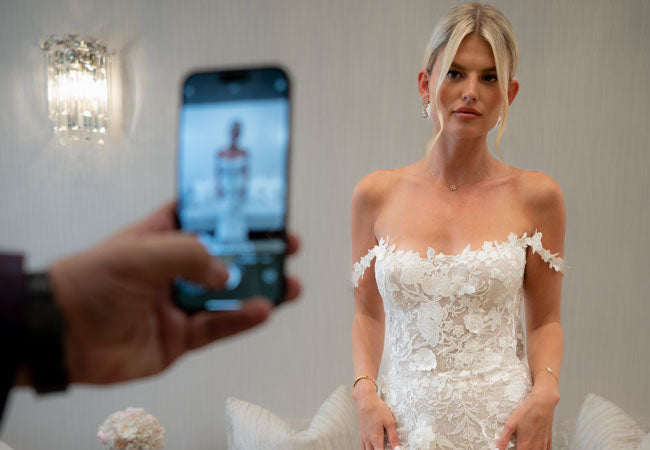
- Fit-and-Flare – A softer version of mermaid/trumpet that gently contours the body before flaring. This silhouette offers structure with improved comfort and is often easier to tailor.
- Sheath (Column) – Straight and narrow from top to hem. Ideal for minimalist brides or destination weddings. Sheath dresses often rely heavily on fabric choice for structure.
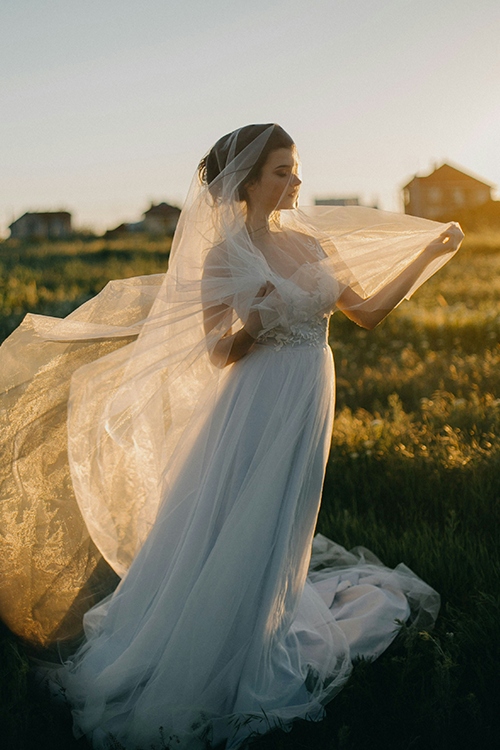
- Empire Waist – High waistline just under the bust with a flowing skirt. This silhouette creates softness and is comfortable, especially for outdoor or warm-weather weddings.
- Drop Waist – The waistline sits lower on the hips, elongating the torso. This style creates a sleek, fashion-forward look but requires careful tailoring for ideal fit.
- Basque Waist – A structured bodice that dips into a V or pointed shape at the waist. It emphasizes curves and adds visual interest while maintaining a classic feel.
- Tea-Length – Hemline falls between the knee and ankle. Playful and practical, tea-length dresses are great for city weddings or more casual settings.
- High-Low – Shorter in the front and longer in the back. This silhouette adds movement and personality but may feel more trend-driven.
- Slip Dress – Minimalist and often bias-cut, slip dresses skim the body naturally. Best for brides who prefer understated elegance and lightweight comfort.
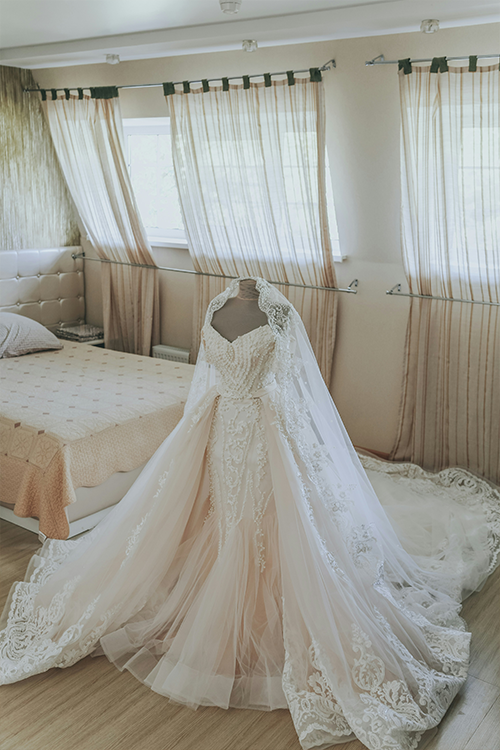
- Overskirt or Convertible Silhouette – A fitted base dress paired with a removable overskirt. This offers two looks in one and can extend versatility, especially when you plan ahead for timing and alteration scheduling.
- Short or Mini – Increasingly popular for courthouse weddings or reception changes. Comfortable, modern, and often easier to preserve or resell due to reduced hem wear.
Silhouette & Alteration Considerations
- Structured gowns: More boning and internal support may require advanced tailoring.
- Fitted styles: Precise measurements matter more in mermaid or trumpet shapes.
- Full skirts: Consider bustle options early to protect the train.
- Fabric matters: The same silhouette can feel completely different depending on material.
Choosing the Shape That Feels Like You
The most flattering silhouette is the one that feels balanced, comfortable, and true to your style. Try a range of shapes—even ones you didn’t initially consider—and focus on how the dress moves and feels, not just how it looks in a single photo.