


10 Things to Know About Wedding Dress Fabrics
From structure to drape to overall feel, the fabric of your wedding dress plays a major role in its look and comfort. Understanding the qualities of different materials can help you choose a gown that complements your style, photographs beautifully, and feels amazing all day. Here are ten key things to know about wedding dress fabrics.
- Satin gives a smooth, luxurious finish – Often made from silk or polyester, satin is known for its glossy surface and elegant drape. It’s perfect for classic, structured gowns.
- Crepe creates a sleek, modern silhouette – Lightweight with a gentle stretch, crepe hugs the body gracefully and is a favorite for minimalist brides.
- Tulle adds softness and volume – Commonly used in skirts, veils, and overlays, tulle creates a romantic, airy look without adding heavy weight.
- Lace brings texture and detail – Whether floral, geometric, or vintage-inspired, lace can define an entire gown’s aesthetic. It’s often layered over other fabrics for depth.
- Organza is crisp and lightweight – With more structure than chiffon but less than satin, organza is ideal for full skirts that need shape without heaviness.
- Chiffon flows effortlessly – Soft, sheer, and incredibly lightweight, chiffon is perfect for outdoor ceremonies and beach weddings where movement matters.
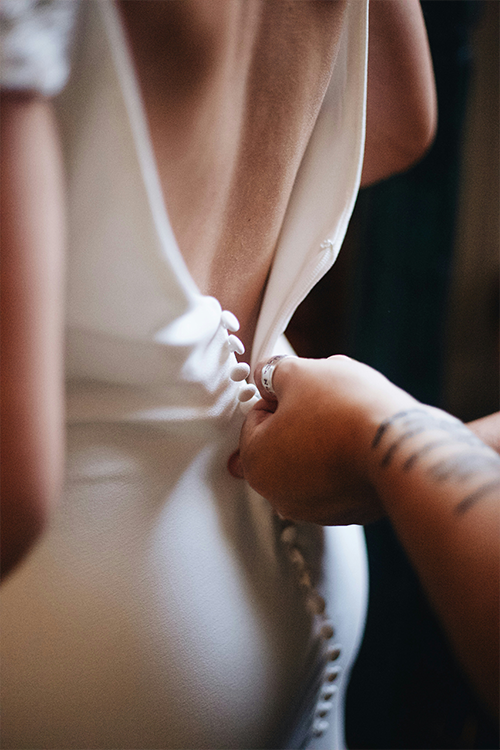
- Mikado offers modern structure – A heavier, lustrous fabric similar to satin but with more body, making it ideal for tailored, fashion-forward designs.
- Mesh and illusion fabrics create subtle transparency – Used in necklines, sleeves, and cutouts, illusion fabrics allow delicate detailing without sacrificing support.
- Beading and embellishments add weight – Intricate beadwork is stunning but can make the dress heavier. Always test comfort and movement when trying embellished gowns.
- Your fabric affects alterations – Some materials (like lace and beaded fabrics) require more time and expertise to alter, while simple fabrics like crepe are easier to adjust.
Choosing the Right Fabric for Your Vision
- Match the season: Light fabrics for warm weather; structured materials for cooler months.
- Consider comfort: Think about breathability, weight, and how the gown feels when sitting or walking.
- Let the silhouette guide you: Different cuts shine best in specific fabrics—fit-and-flare, ball gown, and sheath styles all behave differently depending on material.
Finding Your Perfect Fabric
Whether you love sleek and modern or soft and romantic, understanding wedding dress fabrics helps you choose a gown that reflects your style and fits beautifully. With the right material, your dress will feel as stunning as it looks.